The Nez Perce County Prosecutor’s Office and the Lewiston School District recently reported a local rise in sextortion. On March 23 they released a public statement warning local minors and parents about the dangers of sextortion.
“Over the last several years, we have seen a dramatic rise in ‘sex-tortion’ cases involving kids in our community,” the press release said.
It did not include data or details on the rise in cases, and at LHS, Principal David Kronemann and Student Resource Officer Katie Whitlock didn’t share any numbers or specifics. This was primarily to protect victims’ privacy. The Bengal’s Purr requested comment on the issue from the school district superintendent’s office, but received no response before press time. The March 23 message gave advice to parents and students on how to avoid predators. It urged parents and kids to look out for situations that could be harmful, emphasizing potential dangers of social media.
Across the U.S., between 2021-2023, the number of online enticement reports including sextortion increased by 300%, according to the National Center for Missing and Exploited Children. The organization received 456,000 reports of online enticement. Along with those statistics, Officer Whitlock offered advice and resources that students can use if they find themselves in an unwanted situation online. CyberTipline.org allows a person to take down any explicit photos they may have sent by sending a copy to the FBI, who will then take them down from any undesired place online. TakeItDown.NCMEC.org works similarly. More resources include ic3.gov and ncmec.org.
Some specific social media sites to be wary of, Whitlock said, include Discord, TikTok, Snapchat, Roblox and Instagram. Whitlock encouraged parents to talk with their kids about sexuality, relationships, peer pressure, boundaries, morals and characteristics of a healthy relationship. Sextortion is defined by the FBI as children or teens being threatened and coerced into sending explicit images online. Usually, it starts with the minor being tricked into believing the person who they are communicating with online is their own age, and they begin to foster an online relationship.
Another way it can start is through a direct threat, most commonly a lie stating that the perpetrator already has explicit images of the target. According to the FBI, once an offender has photos or videos from the target, they use them to blackmail the young person. They use shame, create confusion and may threaten to release the photo or video. Often, the victim already knows their offender.
Tim Sperber is the Lewiston School District Superintendent, and he was quoted in the press release.
“I am asking for the entire community to please help all of our kids understand the importance of proper on-line communication,” Sperber shared.
He also noted that all parents should have conversations with their children about online safety.
In an interview with The Bengal’s Purr, Principal Kronemann elaborated more on ways to be safe online. He explained that people tend to be naive online and should understand that a person they’re communicating with may not always be safe. Kronemann gave advice to students, like not sharing identifying factors online such as pictures, photos and sometimes even names. He said it’s good to have a trusted adult to talk with. If there’s not a trusted parent or adult around, he said, it’s helpful to minimize the use of smartphones.
“[Kids] need to be focusing on school and participating in activities, going off to college, being better human beings than the ones before you,” Kronemann said.
He talked about how unfortunate it is that kids have to deal with these issues, and explained how it impacts a school. Students have a hard time feeling safe, he said, when they have to look out for predators and the threat of sextortion.
“We want to make sure that we protect our kids, [but] it’s hard because it’s not a physical thing to protect,” he said.
Overall, in Lewiston, authorities and adults in charge are working hard to get this issue under control. “We continue to try to create proactive policies for students, staff, parents and community members so those types of things don’t happen here at school,” Kronemann assured.
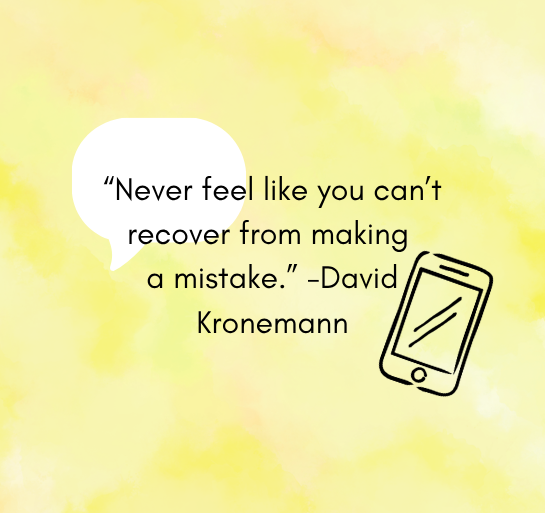
“Never feel like you can’t recover from making a mistake,” Kronemann added.