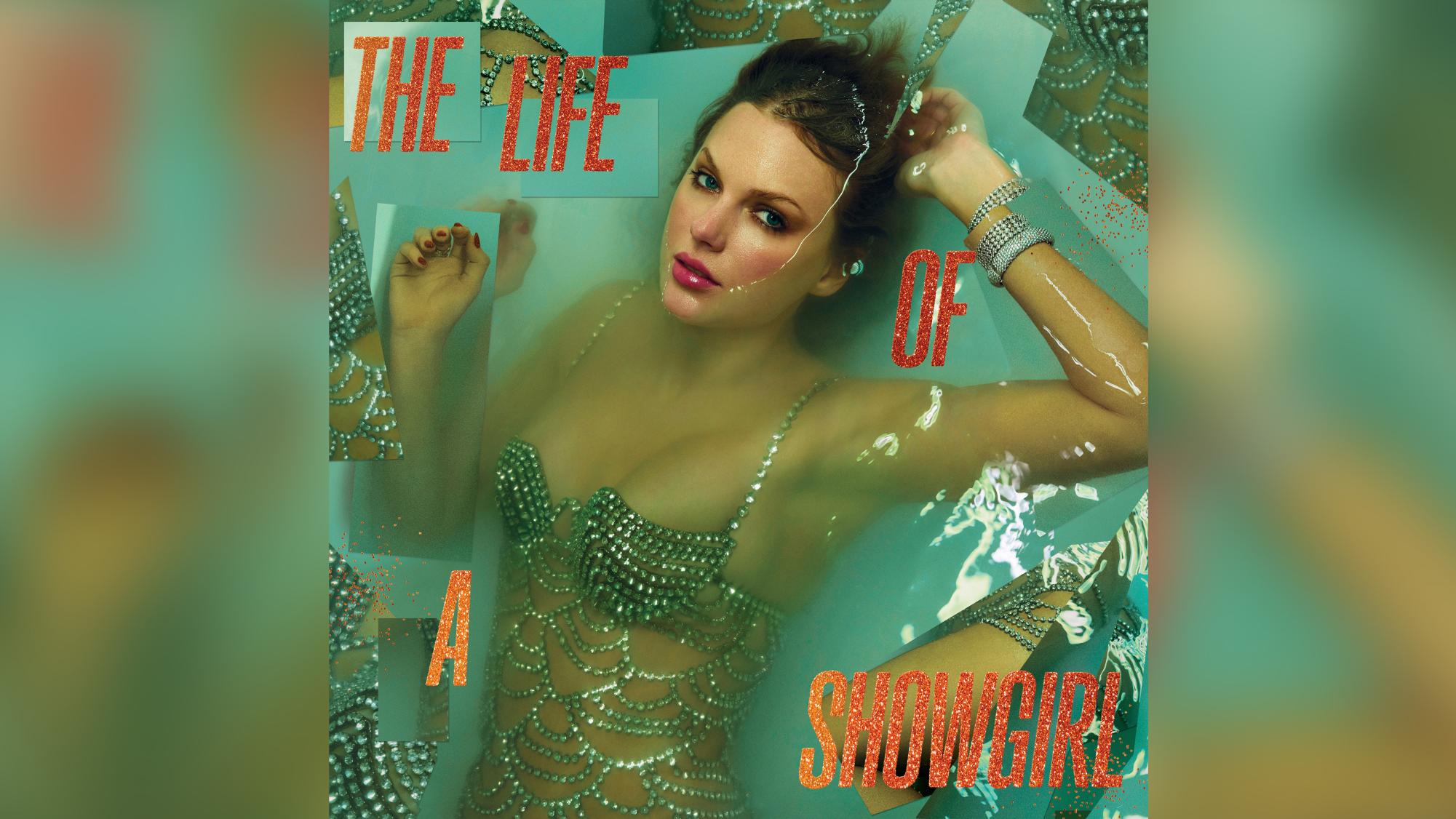
Taylor Swift released her 12th studio album, titled The Life of a Showgirl, on Oct. 3. This album is her most recent since The Tortured Poets Department, which was released in 2024. Overall, this album met my very low expectations. This album reflects her inability to write decent and original music. About 7 out of 12 songs revolve around some sort of male figure; it’s getting old.
The first track on the album, “The Fate of Ophelia,” refers to a character in Shakespeare’s work Hamlet. It consists of Swift talking about how she’s always felt that, because of fame and self-doubt, she couldn’t find true love. But then this man comes along and “saves her” from the tragic fate (or death) of Ophelia. This track is an excellent and upbeat opener, despite its solemn references.
The next song on the album, “Elizabeth Taylor,” begins at a slower pace. Swift references Taylor as a way to express her fear of the public criticizing her public relationship(s). As the song progresses, the beat intensifies. As expected, this song is also centered on a male figure. Swift connects Taylor’s experience in the public eye with her own, while also referencing her new relationship.
“Opalite,” the next song on the album, gives a Sabrina Carpenter vibe due to the beat. It begins with an upbeat drum and bass-oriented touch. It’s seemingly about a man (supposedly Travis Kelce). But this song gives a very different vibe than the others. Though Swift keeps her streak of talking about a man, she gives this song a very nice beat that matches the lyrics, unlike the previous ones.
The fourth track, “Father Figure,” is supposedly referring to her and Scott Borchetta, an American record executive who signed Swift as his first artist in 2005. The line, “I saw potential,” looks into what Borchetta saw in her. Swift gave composer credit to George Michael, who released his hit song, “Father Figure” in 1987. Swift’s song takes part of Michael’s melody and incorporates it in her own way. The song includes subtle indicators of the toxic end of the music industry.
“Eldest Daughter” is the fifth track, which is usually Taylor Swift’s most relatable and emotional song. Fans have noted this specific track in her albums to be passionate. However, that’s not the case this time. Looking back at her previous albums, her fifth tracks, such as “Cold As You” from Taylor Swift, “White Horse” in Fearless, and “All Too Well” in Red, have a distinct approach. This one doesn’t seem to fit the passionate, emotional category. It discusses how the eldest daughter in the family often bears the brunt of the family’s problems and suffers the most.
The sixth track, “Ruin the Friendship,” gives a very detailed picture of a sort of a friendship to lovers’ scene. The line, “My advice is always ruin the friendship,” is about taking the risk, no matter what the outcome might be. If you have feelings, take the chance and express them, regardless of what others think or say about the situation. However, towards the end of the song, listeners discover that the boy spoken about has unfortunately passed away. She expresses her regret for not telling him earlier when she had the chance. This song seems notably special to Swift and is packed with heartfelt lyrics that appeal to many.
“Actually Romantic,” the seventh track, is rumored by fans to be a rebuttal to Charli XCX’s song, “Sympathy is a Knife” from her 2024 album, Brat. The beginning of the song says, “I heard you called me ‘Boring Barbie’ when the coke’s got you brave.” This could be understandably about Charlie XCX, though nothing has been confirmed. Despite its beat, the lyrics themselves are very repetitive and get old after a few lines. Diss tracks usually aren’t that appealing and get old fast.
The eighth track, “Wi$h Li$t,” begins with a very electronic sound. It explores societal expectations, including wealth and appearance. However, Swift discusses her desires and dreams. She wants a family, and she just wants “him,” implying that it doesn’t take much to make her happy in life. If she doesn’t have everything, that’s all right if she only has him. However, it’s easy for her to say that because she already possesses many of the items listed in the song that refer to different aspects of fame. “Bright lights and Balenci’ shades,” “Yacht life under chopper blades,” and “An Oscar on their bathroom floor” all reference objects or lifestyles obtained by money or fame.
“Wood,” the ninth track on the album, has a catchy beat, and it’s not hard to hear the influence of “I Want You Back” by The Jackson 5. It’s almost, if not identical to the beat heard in the famous Jackson 5 song; however, there is no evidence to suggest that she sampled it. Apart from the beat, the song begins innocently but alludes to a more explicit meaning as it develops. This song, on its own, is very out of character for the album and represents a significant departure from the other songs lyrically. This song was ultimately unnecessary. The album would’ve done just as well without it.
The tenth track, “Cancelled!” expresses how she likes her friends to be transparent and honest with both the world and within the friendship. Although this song has a very Reputation vibe, the lyricism within it isn’t as outstanding as it should be.
“Honey,” the 11th track, appears to be about the comfort she feels with a specific person. She knows what they have is genuine and different from others. This seems like a song that would be featured in a Jenny Han film and/or series.
“The Life of a Showgirl,” featuring Carpenter, is the 12th and final track. Here, Swift and Carpenter are fangirling over a woman named “Kitty,” who is “living her dream.” To that, Kitty explains that being a showgirl isn’t all that it seems. She describes the price to pay for a career in performance. Time passes, and then the girl who looked up to Kitty (seemingly Swift) is in Kitty’s shoes and loves her experience so far. As an album closer, this song is definitely worthy. Having a feature from Carpenter really ties this album together and brings it to a close.
Overall, The Life of a Showgirl is a 5/10. There were some hidden gems within this album, such as “The Fate of Ophelia,” “Opalite,” and “The Life of a Showgirl.” However, they weren’t so different from Swift’s previous work. This album seems a bit rushed, given that she only released The Tortured Poets Department in 2024. If Swift had taken more time to provide her songs with more profound meaning through her lyricism, this album would have the potential to be one of her best yet.